Nature Reports Hidden Chambers Beyond Tutankhamun’s Tomb — Why Mummy Folklore Still Guards the Dead
On coverage published Wednesday, September 17, 2026, in Nature, new geophysical work around Tutankhamun’s tomb (KV62) — including microgravity readings described by George Ballard and the long-running chamber hypothesis associated with Egyptologist Nicholas Reeves — put “hidden rooms” and a possible Nefertiti link back into the headlines, with researchers stressing the signals sit near the limits of detection and Egypt’s antiquities authorities still gate any drill. That is the archaeology wire once. This post stops there and sits on what the headline rides: how mummy belief actually formed in story and spectacle, why people pinned motion and curse on the wrapped dead, and which modern rumors are novel add-ons. The Mummy Sand Necropolis Dark Cinema Postcard is one monster frame from that older story, not a lab brief.
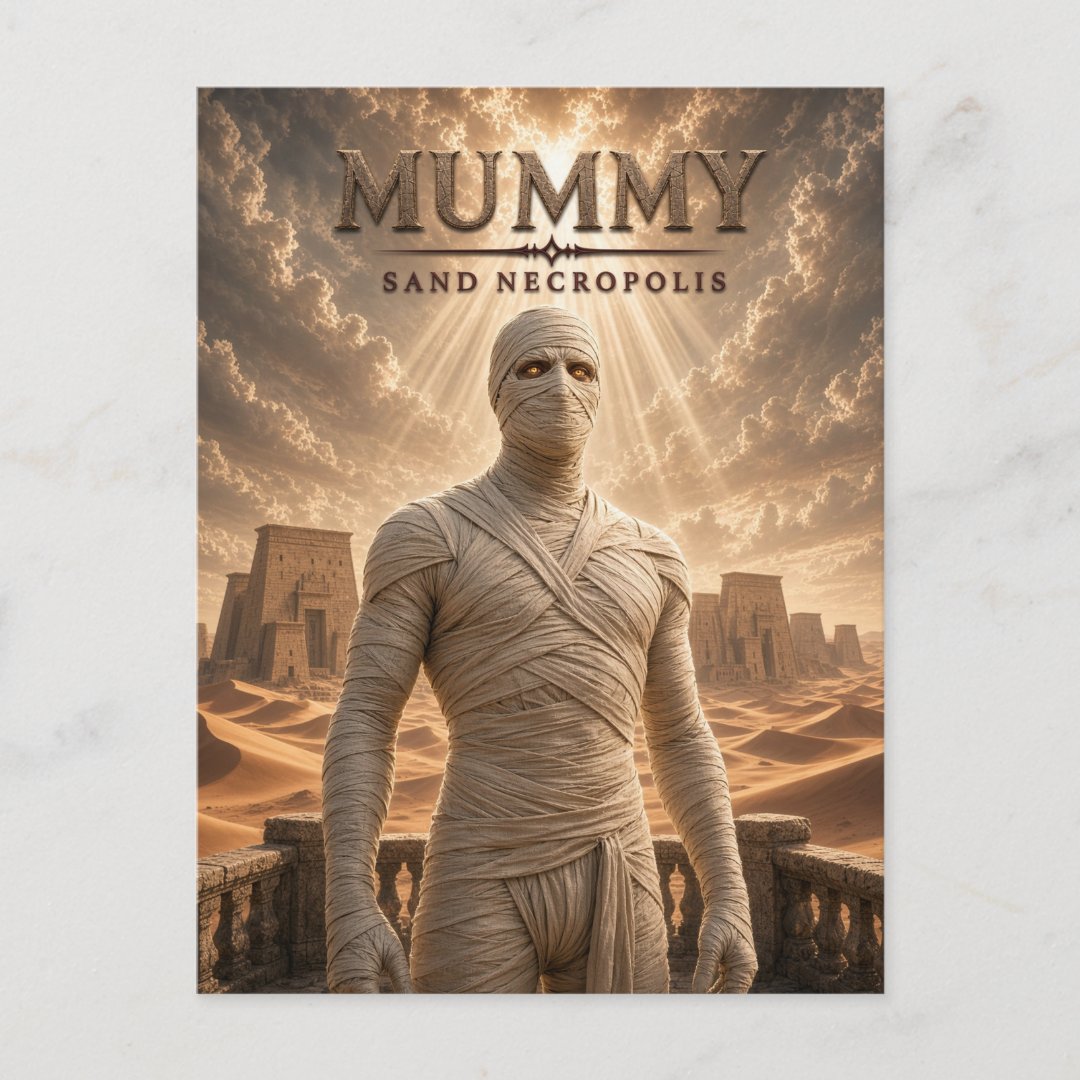
Mummy lore is older than Universal soundstages
Stories of preserved bodies that refuse to stay quiet run thick through Egyptian mortuary practice as outsiders misunderstood it, European collecting, and later pulp and film. The problem was practical. A wrapped corpse that still looked like a person, a tomb opened after centuries, a curse rumor that traveled with newspaper ink. Folklore answered with a creature that explained the unease: linen, a lurching step, a will that outlived the flesh. Travel writers, museum halls, and early cinema mashed wonder and fear together for an age that still catalogued the exotic dead.
People mash “bandage monster walks” into one sticker. Mortuary religion, colonial souvenir culture, literary horror, and modern crypto-curse talk are related only at the word “mummy.” They are not one continuous science. Folklore education starts with the report and the fear, not with a movie prop list.
Why motion on the wrapped dead stuck
Linen and a hidden face were understood as a hazard grammar: something that should be still, and is not. An opened tomb that “punished” visitors explained illness and accident as story. Gold, sand, and moonlight entered later retellings as the legend traveled through print and film. The useful question is not “did curses kill excavators?” It is “what work did the story do?” A public that had no radiology still had to name what a preserved body might hide. Pinning a monster on the wrapped dead was a public answer to private panic at the museum case and the dig.
That is history. The postcard's creature is the folklore body that fear painted — not a dissection chart and not a lecture on invented map labels.
Are the modern rumors true?
Curse as routine tomb behavior. Newspaper exaggeration and later fiction love a dig team felled on cue. Older accounts more often trade in coincidence, infection, and editorial appetite. Do not treat every novel death as ethnography.
One monster, one culture. Egyptian mummification is a real mortuary technology with religious purpose. The word “mummy” in horror is a story net, not a Linnaean label you can tag on every preserved body and close the file.
Necropolis as permanent haunted address. Sand and tombs make a good stage. Plenty of older fears sit in museum halls and shipping crates, not a single cinematic dune with a street name.
Why that body exists in story
A ghost story voted for presence without flesh. A vampire story voted for hunger that returns at night. A mummy story voted for the dead that were carefully kept — and then imagined as unfinished business under linen. That is why a newspaper curse and a modern bandage still owe the same unease the postcard is built to hold.
Why the Dark Cinema postcard looks the way it does
The Mummy Sand Necropolis Dark Cinema Postcard is built from mummy folklore presence, not from a geophysics abstract and not from a lecture on made-up map labels. The figure hangs in dark sand-light because that is the job the myth keeps assigning: linen, motion, a body caught between tomb and silence. A cinematic still is atmosphere and monster, not a site diagram.
Myth And Monsters makes dark cinematic creature art from living folklore. Soft close only when the story needs an object on the wall.
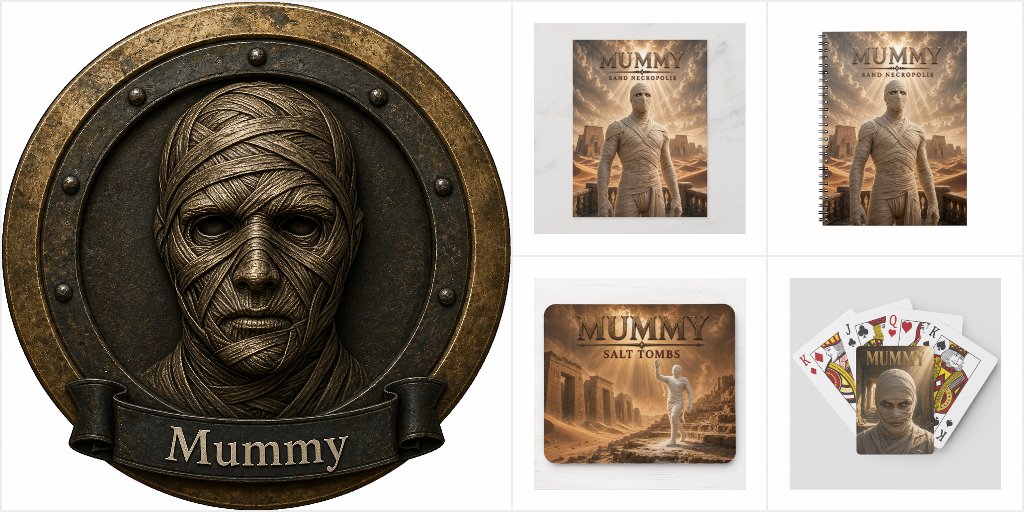
The postcard: Mummy Sand Necropolis Dark Cinema Postcard
More mummy folklore art: Mummy collection


Comments
Post a Comment