D&D Arcana Unleashed Lands September 15, Why Dragons Still Haunt the Ridge
D&D Arcana Unleashed Lands September 15, Why Dragons Still Haunt the Ridge
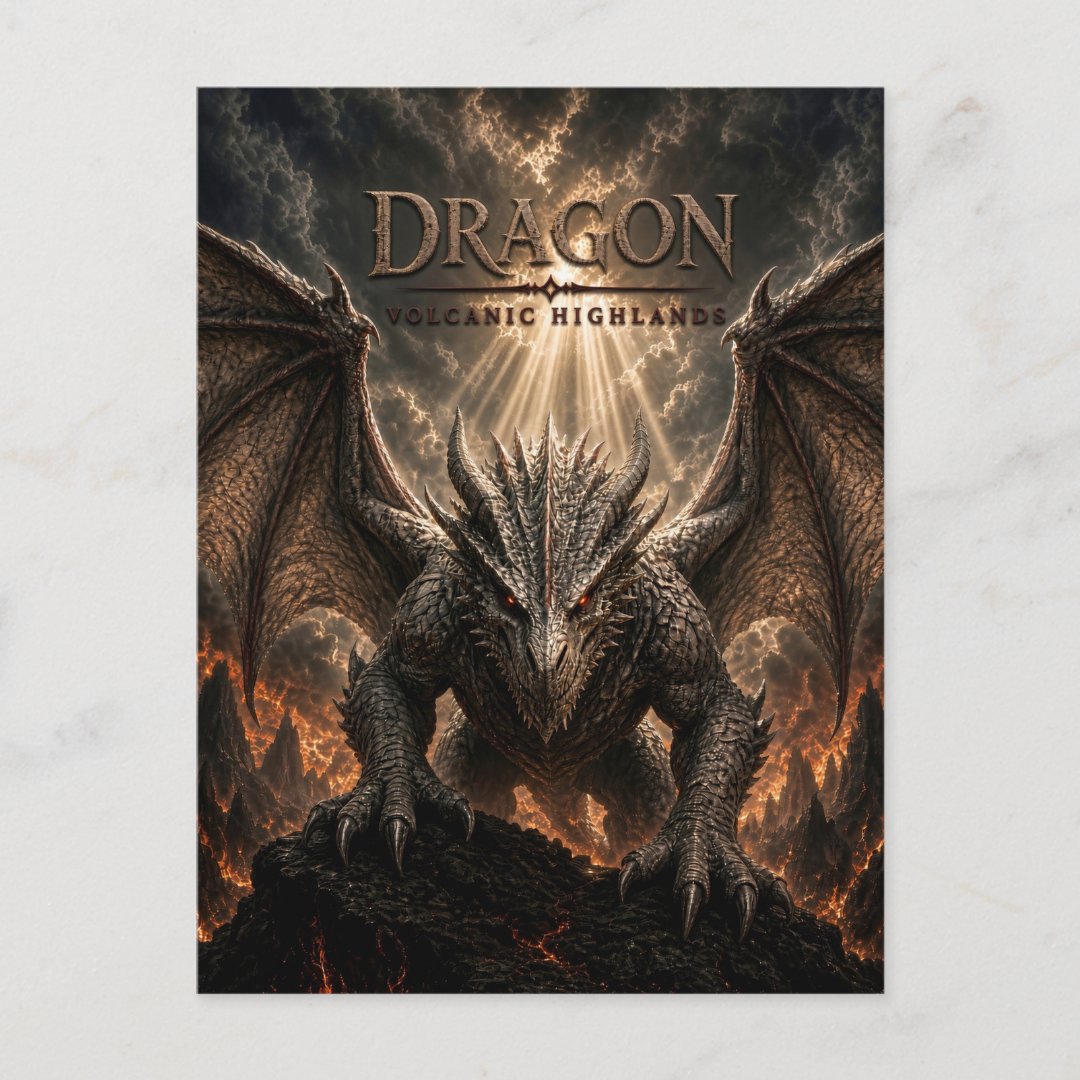
On the Wizards of the Coast calendar, Arcana Unleashed releases September 15, 2026 as the Season of Magic centerpiece — high-magic subclasses, evolving items, nineteen magical creatures, and the Deadfall adventure into Thay — with local-store early access already open. Polygon and D&D Beyond have been walking players through the same September wire. That launch puts dragons back on the cultural wire today: the tabletop hobby’s oldest high-stakes creature, still carrying jaw, wing, and heat. The Dragon Volcanic Highlands Dark Cinema Postcard is one still from that longer myth — place, creature, and one emotion held in a single frame.
What a dragon is, when you stop flattening it
Across cultures, a dragon is not one animal with a single passport. In the broadest sense it is a mythic reptile that concentrates power: size, intelligence, and a relationship to an element. Western and Near Eastern stories often give it wings, a lizard or dinosaur body, and fire or venom in the mouth. Chinese and other East Asian dragons tend to be more serpentine, often wingless yet airborne, and tied to water, rain, and the weather rather than a treasure cave. Both lineages keep the same core: a creature large enough that the landscape has to answer it.
That is why dragons last. They are not a costume. They are a way people have talked about forces bigger than a village — fire from below, storms from above, greed that sits on a hoard, wisdom that guards a gate. When the story works, the room goes quieter, not louder.
Fire, breath, and the body of the myth
European and Northern dragon lore leans hard on fire. The Old English Beowulf dragon flies by night “encircled by fire,” wakes when a cup is stolen from its hoard, and dies only after the hero finds the soft underbelly — classic anatomy of a creature that looks invulnerable until one correct strike. Later fantasy inherits the same package: leathery wings, a jaw that holds heat, a love of treasure, and a temper that turns a ridge into a disaster zone.
Breath is not decoration. It is the myth’s special effect and its moral weather. Fire says the creature remakes the air. Poison says the wound keeps working after the fight. Cloud-breath and rain in Eastern lore say the dragon remakes the sky. In every case the body is a statement about what kind of world the story thinks it is living in.
Why dragons live on mountains and volcanic stone
Dragons and high places keep finding each other. Treasure caves, mountain passes, pits under rock, and ash-lit ridges show up because height and depth are where human maps go quiet. Folklore and geomyth studies often note the cluster: smoke, shaking ground, fire from vents, creatures confined under stone. You do not need to claim every dragon “is” a volcano. You only need to notice the pattern. A volcanic highland is already a story machine — stone that remembers heat, air that tastes of thin smoke, valleys that sleep with fire under them.
In that grammar, the ridge is not a backdrop. It is the other character. The dragon lies along the overlook because the stone never cooled. Scales take the last light. A wing shifts. Sweet thin smoke fills the pass. Fire lives in the jaw. People who saw that did not come down talking. They came down quieter. That is Dark Cinema’s Myth and fantasy rule in one still: place plus creature plus one emotion — awe, held, not shouted.
Hoard, wisdom, and the two tempers
Western dragons often sit on gold because the myth wants a mirror for greed. The creature is the lock on the treasure and the proof that taking it costs blood. Eastern dragons more often sit on authority and weather: rain for the fields, clouds for the empire, a presence to respect rather than a boss to farm. Modern fantasy borrows from both. Tabletop dragons can be tyrants, sages, or something in between. The shared trait is attention. A dragon that does not notice you is not the story. A dragon that notices you is the whole weather system.
Characteristics worth keeping in mind when you read any dragon myth:
- Scale. The body has to feel larger than the village that tells the story.
- Intelligence. Speech, cunning, or long memory — dragons are rarely dumb lizards.
- Element. Fire, poison, water, or storm is the creature’s signature weather.
- Place. Cave, mountain, lake, or cloud — the home is half the character.
- One emotion. Awe, dread, reverence, or hunger held still. Not a menu of moods.
Volcanic Highlands as a dragon place
The Dark Cinema Dragon card puts the creature on basalt above a caldera rim. Ember haze in the valleys. Distant fire sleeping. An immense burning sky. That composition is educational myth grammar, not a flat emblem. You are looking at how dragon stories work when the landscape is allowed to stay hot: the overlook, the wing mid-shift, the jaw that keeps its fire after night takes the ridge.
Labels for this lane stay simple: Myth, fantasy, Dark Cinema. The postcard is one keepable frame from that longer heat — not a rules handout and not a product lecture.
When the session ends and you want living-world animals instead of myth, Wild Realms keeps that lane.
Myth And Monsters makes Dark Cinema creature art: place, creature, one emotion.
The postcard: Dragon Volcanic Highlands Dark Cinema Postcard
The store: Myth And Monsters on Zazzle
Follow drops on X: @MythAndMonsters


Comments
Post a Comment