Floral Dragons Bloom on D&D Beyond, History of Dragons and Why the Fire Myths Stick
The Field Guide to Floral Dragons is now on D&D Beyond — Hit Point Press’s botanical draconomicon, with August 25, 2026 partner coverage and early-September fan writeups (including dungeonsanddragonsfan.com) still circulating into midmonth. Subclasses, Floral Dragonborn, and a garden of plant-dragon stat blocks put dragons back on the cultural wire today. The Dragon Volcanic Highlands Dark Cinema Postcard is one keepable frame from that longer myth.
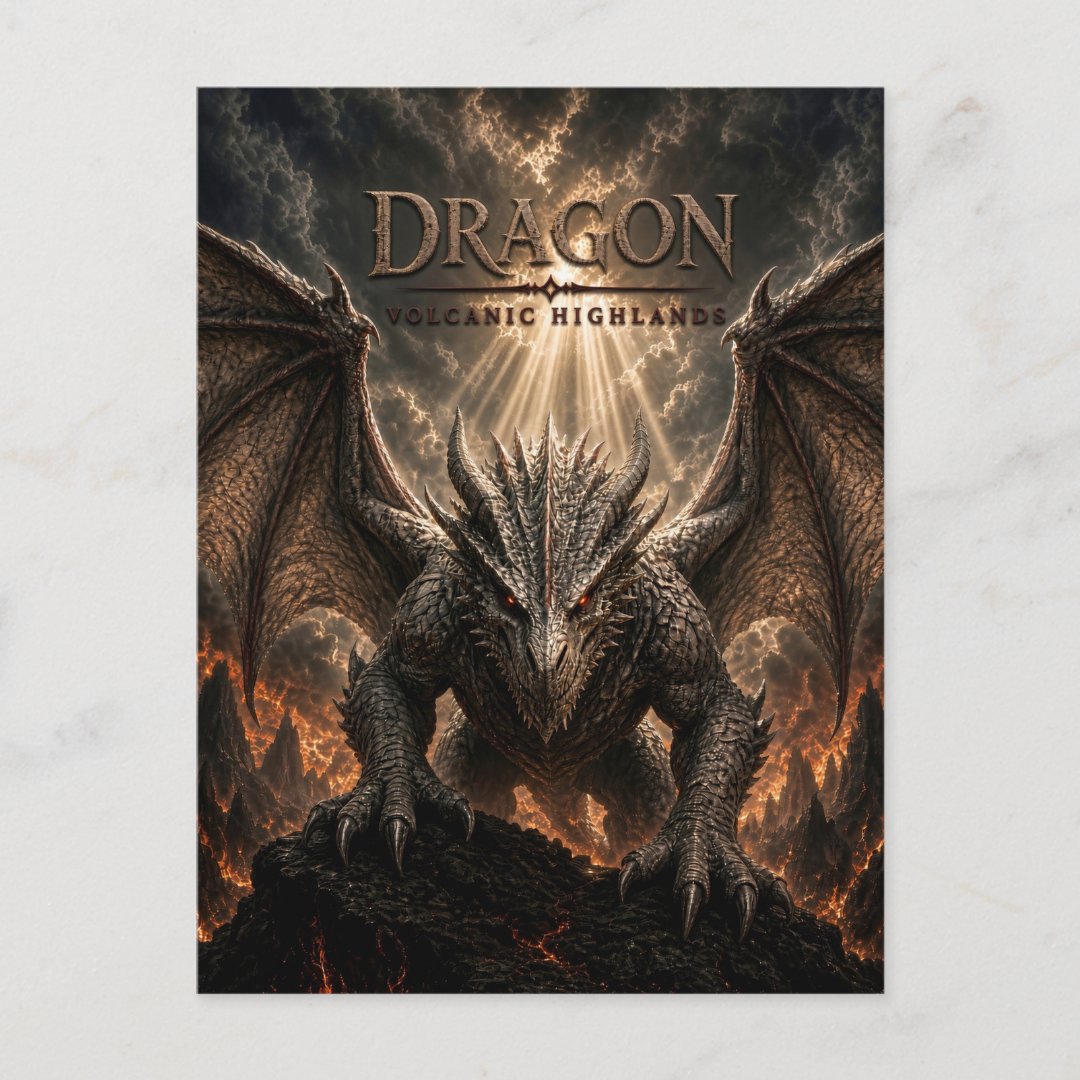
A short history of the dragon
Across cultures, a dragon is not one animal with a single passport. In the broadest sense it is a mythic reptile that concentrates power: size, intelligence, and a relationship to an element. Western and Near Eastern stories often give it wings, a lizard or dinosaur body, and fire or venom in the mouth. Chinese and other East Asian dragons tend to be more serpentine, often wingless yet airborne, and tied to water, rain, and the weather rather than a treasure cave. Both lineages keep the same core: a creature large enough that the landscape has to answer it.
That is why dragons last. They are not a costume. They are a way people have talked about forces bigger than a village — fire from below, storms from above, greed that sits on a hoard, wisdom that guards a gate.
Why fire, breath, and the body of the myth?
European and Northern dragon lore leans hard on fire. The Old English Beowulf dragon flies by night “encircled by fire,” wakes when a cup is stolen from its hoard, and dies only after the hero finds the soft underbelly — classic anatomy of a creature that looks invulnerable until one correct strike. Later fantasy inherits the same package: leathery wings, a jaw that holds heat, a love of treasure, and a temper that turns a ridge into a disaster zone.
Breath is not decoration. It is the myth’s special effect and its moral weather. Fire says the creature remakes the air. Poison says the wound keeps working after the fight. Cloud-breath and rain in Eastern lore say the dragon remakes the sky. In every case the body is a statement about what kind of world the story thinks it is living in.
Are the rumors true?
Depends which rumor — and which culture’s dragon you mean.
- They breathe fire. Common in Western fantasy. Older lore mixes fire, poison, and storm. East Asian dragons more often move weather than torch a barn.
- They sit on gold. Strong in Western greed stories. The creature is the lock on the treasure and the proof that taking it costs blood. Eastern dragons more often sit on authority and rain for the fields.
- They are mindless beasts. Usually false. Speech, cunning, or long memory show up again and again. Dragons are rarely dumb lizards.
- They live in mountains and caves. A frequent Western pattern, not a universal law. Lakes, clouds, and rivers claim plenty of dragons elsewhere.
- One weak spot kills them. A popular story shape (underbelly, missing scale, stolen cup). Treat it as narrative fairness, not biology.
Characteristics worth keeping when you read any dragon myth:
- Scale. The body has to feel larger than the village that tells the story.
- Intelligence. Speech, cunning, or long memory.
- Element. Fire, poison, water, or storm is the creature’s signature weather.
- Attention. A dragon that does not notice you is not the story. A dragon that notices you is the whole weather system.
When you want living-world animals instead of myth, Wild Realms keeps that lane.
Myth And Monsters makes Dark Cinema creature art.
The postcard: Dragon Volcanic Highlands Dark Cinema Postcard
The store: Myth And Monsters on Zazzle
Follow drops on X: @MythAndMonsters


Comments
Post a Comment