Eggers’ Werwulf Heads for Christmas 2026, Why Werewolf Folklore Never Needed a Silver Bullet
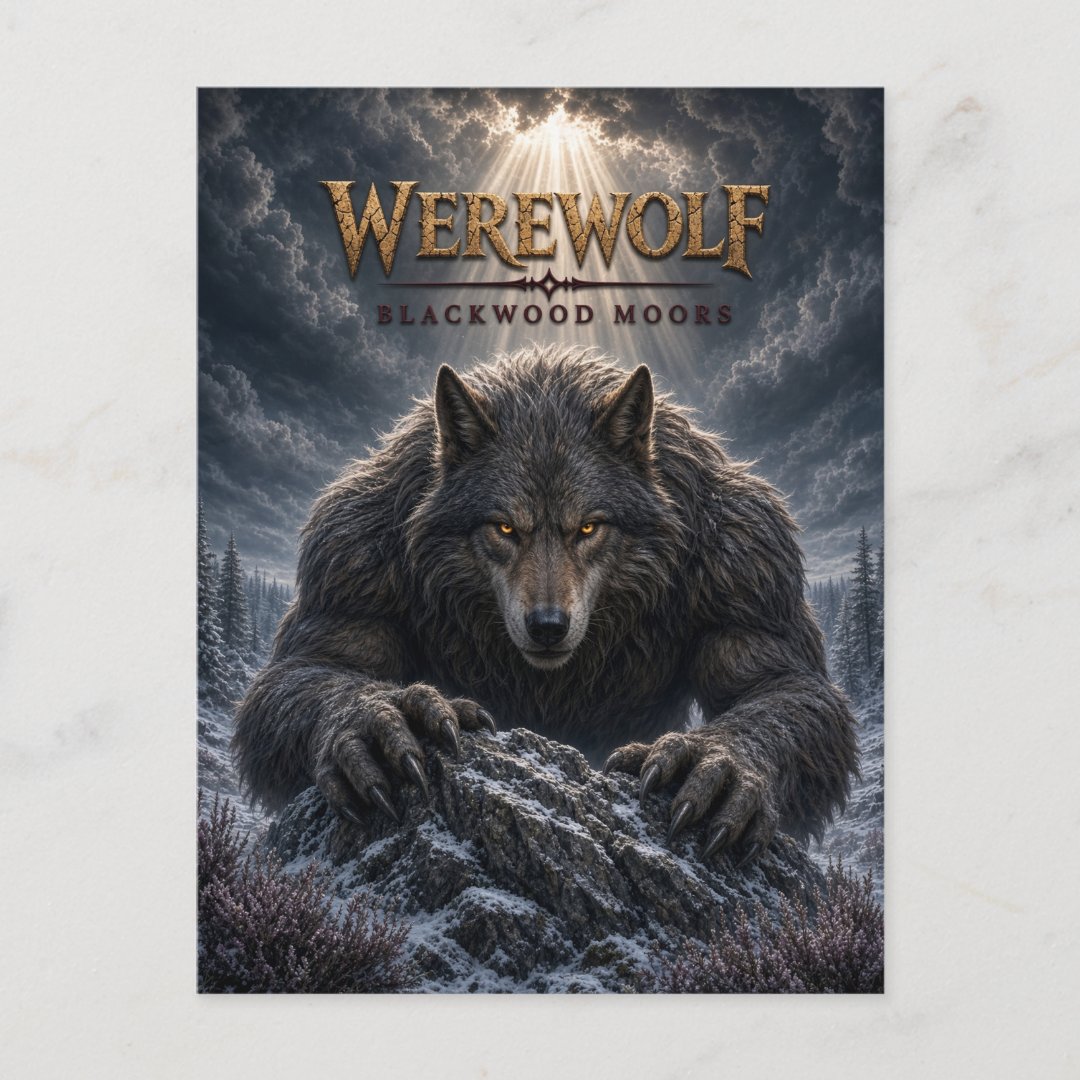
On coverage published Tuesday, September 9, 2026, in Polygon, director Robert Eggers talked through Werwulf — his medieval werewolf film with Aaron Taylor-Johnson, Lily-Rose Depp, Willem Dafoe, and Ralph Ineson, set for theaters on December 25, 2026 — and said the Welsh forest “has its own rules,†while the story leans on period lore rather than campy bite-and-silver clichés. That is the franchise wire once. This post stops there and sits on what the headline rides: how werewolf folklore actually formed in medieval Europe, why people blamed wolf-shapes for human violence, and which modern rumors are Hollywood add-ons. The Werewolf Blackwood Moors Dark Cinema Postcard is one monster frame from that older story, not a release-date poster.
Werewolf lore is older than Universal makeup
Stories of humans taking wolf shape — or being accused of it — run through classical hints and, more thickly, through medieval and early modern Europe. Chroniclers and trial records treat the werewolf as a moral and legal problem: a person whose violence seemed animal, whose confession named a pact or a skin, whose neighbors needed a category when ordinary crime language failed. English wolf lore thinned as wolves themselves were driven out for livestock protection; continental trials and Norse wolf-warrior traditions kept the figure busy longer.
People mash “full moon plus bite†into one sticker. Medieval accusations, Norse úlfhéðnar (wolf-coat) warrior imagery, and twentieth-century movie contagion are related only at the word “wolf.†They are not one continuous science. Folklore education starts with the accusation and the fear, not with a special-effects calendar.
Why the wolf-man stuck
Wolves were real predators on flocks. A human who killed like a predator — or who lived at the social edge — could be narrated as no longer fully human. In Christian settings, that story often picked up demonic framing: the shape-change as sin made visible. In other registers, berserk and wolf-coat traditions treated animal fury as a warrior technology. Both strands explain why the figure lasts: it names a fear of neighbors and a fantasy of power in the same skin.
The useful question is not “is lycanthropy real?†It is “what work did the accusation do?†Trials and pamphlets used the werewolf to police violence, difference, and panic. That is history. The postcard’s creature is the folklore body that fear painted — not a medical chart.
Are the modern rumors true?
Bite transmission. Contagious lycanthropy is largely modern entertainment grammar. Older stories more often use curse, pact, ointment, or inherited affinity. A bite-only rule is cinema efficiency, not the medieval default.
Silver bullets. Silver as a special weakness is popular culture layering. Folklore remedies vary by region — iron, prayer, naming, or simply killing the accused human. Do not treat a movie prop list as ethnography.
Full moon only. Lunar timing shows up in some tellings and many scripts. Plenty of older accounts do not wait for a calendar cue. Moonlight is atmosphere; it is not a required switch.
Why that body exists in story
A vampire story voted for appetite and the grave. A witch story voted for neighborly malice and craft. A werewolf story voted for the thin line between human cruelty and animal hunting — the body that looks like us until it does not. That is why a Christmas 2026 film can reset clichés and still owe the same medieval fear the postcard is built to hold.
Why the Dark Cinema postcard looks the way it does
The Werewolf Blackwood Moors Dark Cinema Postcard is built from werewolf folklore presence, not from a release schedule and not from a lecture on made-up map labels. The creature stands in moor light because that is the job the myth keeps assigning: night ground, human fear, a body caught between hunt and person. A cinematic still is atmosphere and monster, not a spoiler reel.
Myth And Monsters makes dark cinematic creature art from living folklore. Soft close only when the story needs an object on the wall.
The postcard: Werewolf Blackwood Moors Dark Cinema Postcard
More monsters: Myth And Monsters store


Comments
Post a Comment